H
a r b o u r
Ships Historic warehouse district and buildings History


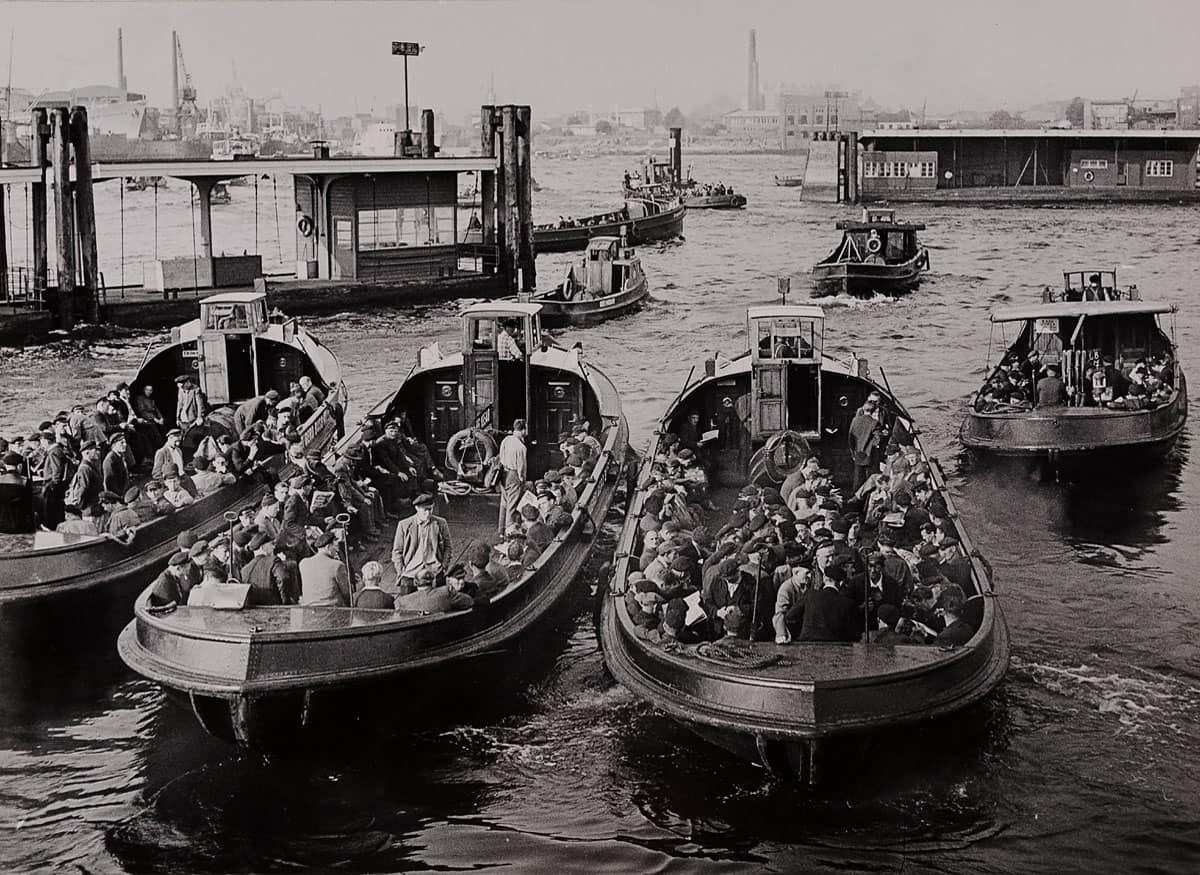
Discover the fascinating history of the barges in the Port of Hamburg! For over 100 years, these traditional watercraft have been a part of the maritime heritage. Originally powered by steam engines, they once transported workers to the shipyards and carried out towing assignments. Over time, they were converted to modern diesel engines. The conversion from steam engines to diesel engines in barges mainly took place in the early 20th century, especially in the first decades. This transition was part of the general development of maritime technology, where the focus shifted from steam propulsion to the more efficient and less maintenance-intensive diesel propulsion.
The introduction of diesel engines brought several advantages, including increased efficiency, easier handling, and lower operating costs compared to steam engines.
Today, only a few traditional barges have been lovingly restored and are now used in tourism. Experience the nostalgic atmosphere on board and explore the port from a very special perspective. Immerse yourself in history and enjoy an unforgettable journey on one of these charming barges!

Rickmer Rickmers
The history of the Rickmer Rickmers is marked
by an impressive maritime past. The majestic full-rigged ship was
launched in August 1896 at the shipyard of the Bremerhaven shipping
company Rickmer Clasen Rickmers. It was named after the grandson of the
shipowner, Rickmer Rickmers, who himself later played a significant role
in maritime history.
The ship embarked on its first journey to
Hong Kong, transporting rice and bamboo back to Germany. Under the
leadership of Captain Hermann Hinrich Ahlers and a crew of 21, the
Rickmer Rickmers undertook twelve voyages that took them primarily to
the United States and the Far East. However, challenging times also
occurred: in 1904, the ship lost its mizzen mast during a hurricane in
the Indian Ocean, the notorious "Black Southeast Wind." Nevertheless,
the brave crew managed to save the ship and convert it into a barque in
Cape Town.
In 1912, the Hamburg shipping company Carl
Christian Krabbenhöft acquired the ship and named it "Max." In the
following years, the Rickmer Rickmers was used for transporting coal
from Wales to Chile and saltpetre from Chile to Europe. But the outbreak
of World War I brought the ship to anchor near the neutral Azores, where
on February 23, 1916, it was confiscated by Portuguese forces and
renamed "Flores" to transport war goods for Great Britain.
After a reconstruction, the ship was renamed
"Sagres" in 1924 and served as a sail training ship for the Portuguese
Navy. Equipped with two additional diesel auxiliary engines, the Sagres
won the Tall Ships' Races regatta in 1958. However, its time as a sail
training ship ended in 1962 when the current Sagres was commissioned.
From then on, the three-masted ship served as a depot ship named "Santo
André" in the naval harbor of Alfeite, Lisbon.
Fortunately, the Rickmer Rickmers was saved
from being forgotten. In 1974, the association "Windjammer für Hamburg"
was founded to keep Hamburg's maritime history alive. In 1983, the
association acquired the dilapidated ship in exchange for a yacht. After
an extensive restoration, the Rickmer Rickmers was finally brought back
to life as a museum ship at the Hamburg Landungsbrücken.
Today, visitors can board the impressive
museum ship and climb up to 30 meters in height on the standing rigging
to enjoy a breathtaking view. The Rickmer Rickmers recalls a time when
sailing ships played a significant role in trade and transport, and it
keeps the memory of Hamburg's maritime history alive.
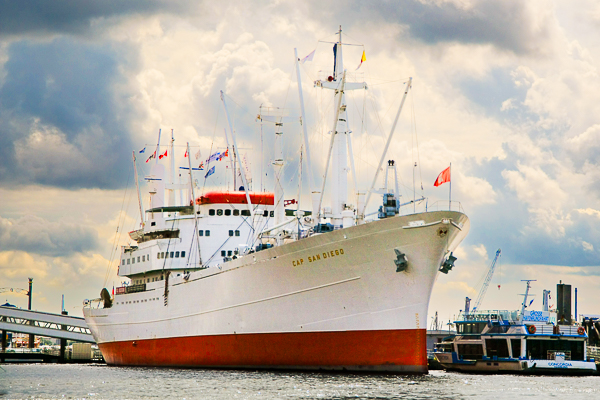
Cap San Diego
The motor ship Cap San Diego is the
largest operational museum cargo ship in the world, located at the
Overseas Bridge in the Port of Hamburg, and belongs to the first Cap San
class. This general cargo freighter was built in August 1961 by the
Deutsche Werft AG in Hamburg for the Hamburg Süd shipping company and
was named Cap San Diego after a cape on Isla de los Estados in Tierra
del Fuego. It was the last ship of a series of identical general cargo
freighters and was also called the "White Swans of the South Atlantic"
due to its elegant shape.
The motor ship Cap San Diego represented a
pinnacle in mechanized cargo ship construction in Germany and was
characterized by a wide variety of professions that were developed in
the cargo shipping industry. The ship had sixteen cargo booms, two
onboard cranes, a heavy cargo boom, and five cargo holds with up to
three tween decks. Two of the cargo holds were equipped as refrigerated
cargo holds for transporting refrigerated goods. In addition, the ship
had six heatable cargo tanks for transporting sweet oils.
The Cap San Diego served in liner service to
South America, transporting a variety of goods including machinery,
chemicals, automobiles, meat, coffee, fruits, textiles, and much more.
For passengers, the ship offered luxurious amenities that were usually
only found on passenger and combination ships. The separate passenger
deck had a lounge, a dining room, and even an outdoor swimming pool with
a pool bar.
With the advent of container ships, many
general cargo freighters, including the Cap San Diego, were taken out of
service in the 1980s. The ship was rescued from scrapping and in 1987
was taken over by the Hamburger Admiralität Foundation, which
transformed it into an impressive museum ship. Since then, the Cap San
Diego attracts around 100,000 visitors from all over the world annually.
The museum ship not only showcases the impressive history of shipping
but also hosts changing exhibitions and offers rentable event spaces.
The Cap San Diego has become an attractive
attraction, offering not only the museum but also gastronomy and a small
hotel operation. Visitors have the opportunity to stay in the ship's
eight cabins. In addition, up to ten guest cruises are offered annually,
covering various destinations along the North Sea coast.
The former cargo hold 4 of the ship has been
transformed into an escape game with four game rooms, and on the deck,
you can challenge yourself in Germany's only water-based climbing park.
The Cap San Diego has found its place in
maritime history and remains a fascinating testament to the past,
allowing visitors of all ages to immerse themselves in the world of
maritime navigation.
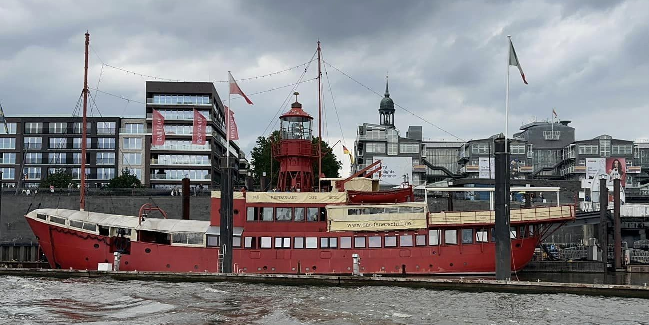
Lightship
In the picturesque Hamburg City
Marina, the imposing lightship stands as a guardian of the harbor
entrance, serving a significant purpose. This maritime gem played a
crucial role in ensuring shipping safety while adding a touch of
nostalgia and character to this bustling port area.
What sets the lightship in the Hamburg City
Marina apart is its unique blend of functional importance and historical
heritage. Many of these vessels carry a rich maritime history within
them, dating back to decades past. They tell tales of sailors' legends
and remind us of the importance of maritime safety in times long gone.
Beyond its functional role, the lightship
exudes a particular fascination for locals and tourists alike. Its
distinctive silhouette and connection to Hamburg's maritime history make
it a popular subject for photographs and a place that piques curiosity.
The lightship, also known as "Trinity House
LV13" (Lightvessel 13), was completed in 1952 at the Philips & Son
shipyard in Dartmouth and entered service. For 36 years, it served as an
essential reference point for captains navigating the Humber Estuary on
the east coast of England. Equipped with an array of lights, foghorns,
and bells, this lightship facilitated the navigation of unfamiliar
vessels during poor visibility and at night. The characteristic
silhouette, featuring the towering lighthouse and its light signals,
provided reassurance to mariners approaching treacherous waters.
On March 10, 1989, the lightship was
decommissioned and replaced by a large buoy. On June 21, 1991, Captain
Wulf Hoffmann purchased the ship for £30,000 and oversaw its
transformation into a restaurant ship between November 1992 and November
1993 at the Jöhnk Shipyard (Harburg / Stader Stadthafen).
Since November 1993, the Lightship has been
moored in the Hamburg City Marina as a highly esteemed restaurant,
museum, and small hotel. I strongly recommend making a reservation in
advance, as the restaurant tends to be fully booked most of the time.
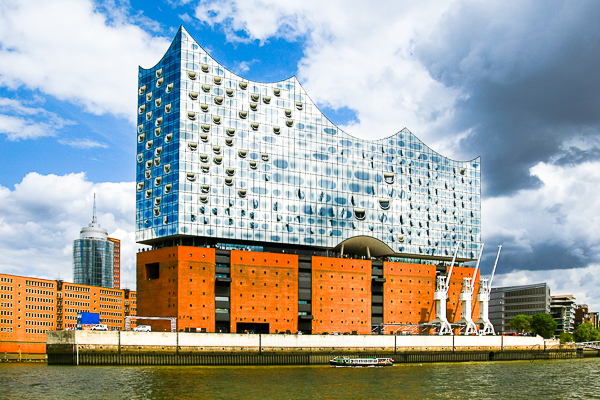
The Elbphilharmonie
The Elbphilharmonie, affectionately referred
to as "Elphi", is a concert hall completed in November 2016 in Hamburg,
Germany. It was built with the aim of creating a new landmark for the
city and a cultural monument for all. The building, designed by the
Basel-based architectural firm Herzog & de Meuron, is located in the
HafenCity district on the right bank of the River Elbe on the Großer
Grasbrook, between the mouths of the Sandtorhafen and Grasbrookhafen
harbor basins.
The idea for the Elbphilharmonie originated
from an initiative presented by Hamburg project developer Alexander
Gérard in 2001. The construction was approved in 2007 by the city
assembly under Mayor Ole von Beust. The Free and Hanseatic City of
Hamburg was a partial shareholder and the main financier of
Elbphilharmonie Bau KG, which built the structure on behalf of the city
through the construction service provider Hochtief.
Originally planned for the year 2010, the
completion of the building was delayed several times, and construction
costs increased significantly. In the end, the construction costs
amounted to around 866 million euros, instead of the originally
estimated 186 million euros. Hamburg assumed 789 million euros of the
construction costs.
The concert hall has a height of 110 meters
and comprises 26 floors. The total usable area is approximately 125,512
square meters. The structure of the building is made of reinforced
concrete and a glass façade. It includes a Great Concert Hall with 2,100
seats, a Small Hall with 550 seats, and a Kaistudio 1 with 170 seats.
The acoustics of the Great Hall were developed with the assistance of
the renowned acoustician Yasuhisa Toyota.
A prominent feature of the Elbphilharmonie is
the publicly accessible Plaza, located between the brick base of the
Kaispeicher and the glass structure at a height of 37 meters. From here,
there is a breathtaking view over the River Elbe, the harbor, and the
city center.
The building also houses the
four-and-a-half-star hotel "The Westin Hamburg" with 244 rooms, operated
by Marriott International. Additionally, there are gastronomic
facilities, including the restaurant "Störtebeker", operated in
collaboration with the Störtebeker brewery and east Hotel & Restaurant
GmbH.
Another highlight is the concert organ in the
Great Hall, built by the organ-building company Johannes Klais Orgelbau.
It has 69 stops with a total of 4,765 pipes and two consoles.
The Elbphilharmonie is not only a cultural
highlight but also an important part of urban marketing for Hamburg and
HafenCity. The opening was accompanied by extensive campaigns to
strengthen the city's international perception.
The Elbphilharmonie is an impressive example
of modern architecture that transforms Hamburg into a significant
cultural and architectural center. Despite the challenges during
construction and the increased costs, the concert hall has become a
proud symbol of the city and attracts visitors from around the world.
Hywax GmbH
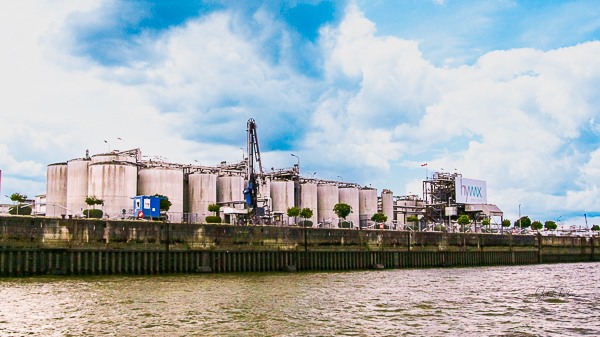
Hywax GmbH is an integral part of the international AWAX Group, which
employs around 700 staff members. At its location in the Port of
Hamburg, approximately 350 employees and 16 apprentices are dedicated to
manufacturing a diverse range of paraffin waxes, both mineral-based and
synthetic. Additionally, the company produces wax emulsions and
vaseline. Further production facilities for emulsions are located in
Linz, Austria, and Birkenhead, United Kingdom.
This extensive product range finds global application in various
processing industries. These include, for instance, hot melt adhesives,
the paper and packaging industry, paint and varnish production,
cosmetics and pharmaceutical products, wood materials, candles, as well
as road construction.
Port Area O'Swaldkai
The Port and Logistics Company Hamburg (HHLA)
operates the terminal facilities, as well as the affiliated Unikai
warehousing and forwarding company, which is part of HHLA.
History
In the port area of O'Swaldkai on Kleiner
Grasbrook, south of the Norderelbe River and on the north side of
Hansahafen, which was established at the end of the 19th century,
approximately 1000 employees are engaged in handling logistics services
on an area of 75 hectares. The quays mainly handle refrigerated goods,
as well as RoRo (roll-on/roll-off) and ConRo (container
roll-on/roll-off) ships. Additionally, project cargoes and forestry
products play a significant role.
RoRo Terminal
The handled goods primarily include
containers, project cargo, heavy goods, as well as RoRo cargo in the
form of cars and trucks, as well as trailers. Additionally, a smaller
scale handling of wood and other conventional cargo is conducted. There
are two berths available, with a maximum depth of 11.5 meters and a
total quay length of 800 meters. The terminal area covers 800,000 square
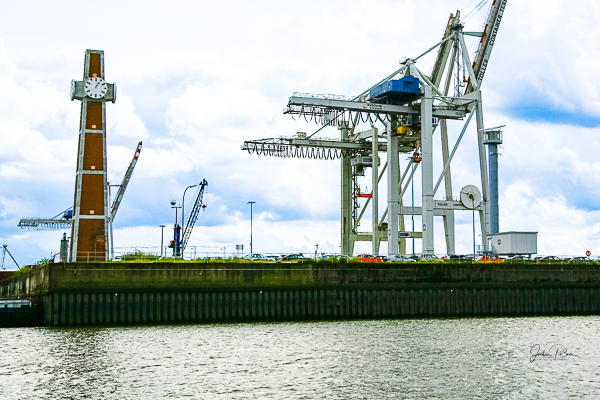
meters. For handling, there are two container cranes and a mobile harbor
crane with a lifting capacity of up to 104 tons. On the Hamburg
O'Swaldkai site, 1307 parking spaces for cars and 3800 spaces for
containers have been created.
The Elbtower
A Skyscraper Project in Hamburg
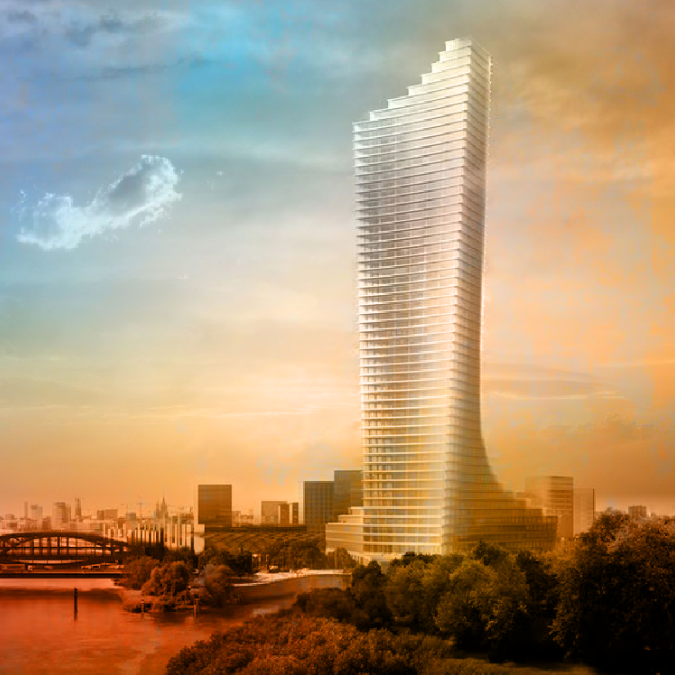
The Elbtower is a planned high-rise project in the eastern part of
the HafenCity in Hamburg. The financing and realization of this
approximately 950 million euro construction project is intended to
be carried out by Signa Prime Selection AG, a subsidiary of Signa
Holding.
With a planned height of 245 meters and 64 floors, the Elbtower
would be by far the tallest conventional building in Hamburg and the
third tallest nationwide, after the Commerzbank Tower and the
Messeturm in Frankfurt am Main. The design comes from Christoph
Felger from the office of the British architect David Chipperfield,
who has already realized the lower high-rise project Empire
Riverside Hotel in Hamburg.
Location
The building is planned to be located at a prominent site on the
northern bank of the River Elbe and would mark the entrance to the
city center. The location is delimited by the Freihafenelb Bridge
and the railway bridges to the west, as well as the Billhorner
Bridge and the New Elb Bridge to the east. It is situated directly
at the Hamburg Elbbrücken train station.
Construction Description
The Elbtower has the shape of an isosceles right-angled triangle,
where the hypotenuse runs parallel to the bank of the Oberhafen
Canal in the northeast, and the legs of the triangle are to the west
and south. The design encompasses a base with four to five stories,
upon which six to seven additional stories develop. In the southeast
of the building, a slender, approximately 64-story tower extends.
The top eight floors of the tower recede to the northeast. The
complex shape of the building results in various urban effects.
Usage
The gross floor area is about 160,000 m², of which around 122,000 m²
are above ground. Of these, 77,000 square meters are dedicated to
office space spread over 48 floors. The Nobu Hotel, founded by
Robert De Niro, and an associated restaurant will be located on
multiple floors in the Elbtower. Publicly accessible areas include
wine and gourmet shops, galleries, cafes and bistros, as well as a
gym and spa. An observation platform on the 55th floor will also be
publicly accessible.
History
The project was first introduced in March 2017 at the MIPIM real
estate fair. The building application was submitted in December
2020, and the zoning plan was approved in January 2021. Completion
is planned for early 2026. By the end of July 2023, the shell
construction had reached a height of about 60 meters, and a height
of 100 meters is intended to be reached by the end of 2023.
HafenCity Hamburg
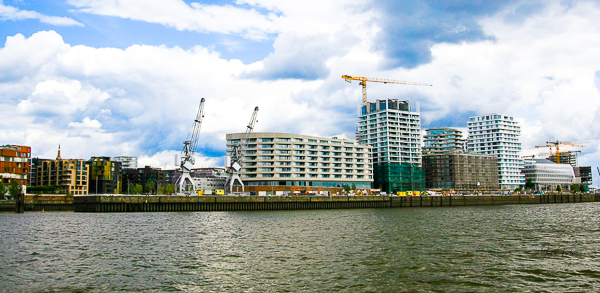
The HafenCity Hamburg is undoubtedly one of
the most impressive urban developments in Europe. This project not only
represents Hamburg's pursuit of modernity and sustainability but also
its ability to harmonize history and innovation.
Historical Background
The history of HafenCity dates back a long way. The area now known as
HafenCity was once an integral part of the Port of Hamburg, serving as a
storage and trading center. However, over time, the demands of the port
changed, rendering many of these buildings and warehouses obsolete.
Project Inception
The idea to transform this area into a modern urban space emerged in the
early 2000s. The official construction phase began in 2003, and since
then, HafenCity has been continuously evolving. The development is
expected to continue into the 2030s.
Facts and Figures
HafenCity is Europe's largest inner-city construction project, spanning
an area of approximately 157 hectares, roughly equivalent to the size of
200 football fields.
It is situated between the renowned Elbphilharmonie and the
Norderelbbrücken, where a total of around 6,000 to 7,000 apartments will
be built in HafenCity, providing space for approximately 15,000 to
20,000 people.
The project encompasses a variety of buildings, including residential
complexes, office buildings, cultural institutions, restaurants, shops,
the world's largest Maritime Museum, featuring an extensive collection
of maritime artifacts from around the world, and much more.
Musicals in Hamburg Harbor
Magical Entertainment against a Maritime
Backdrop
The Hamburg Harbor is not only a bustling hub
for goods from around the world but also a stage for artistic
performances and cultural events. Amidst this vibrant atmosphere, two
musicals have established themselves, captivating both locals and
tourists alike. "The Lion King" and "Frozen" – two unforgettable
productions renowned not only for their impressive performances but also
for their unique venues.
The Lion King
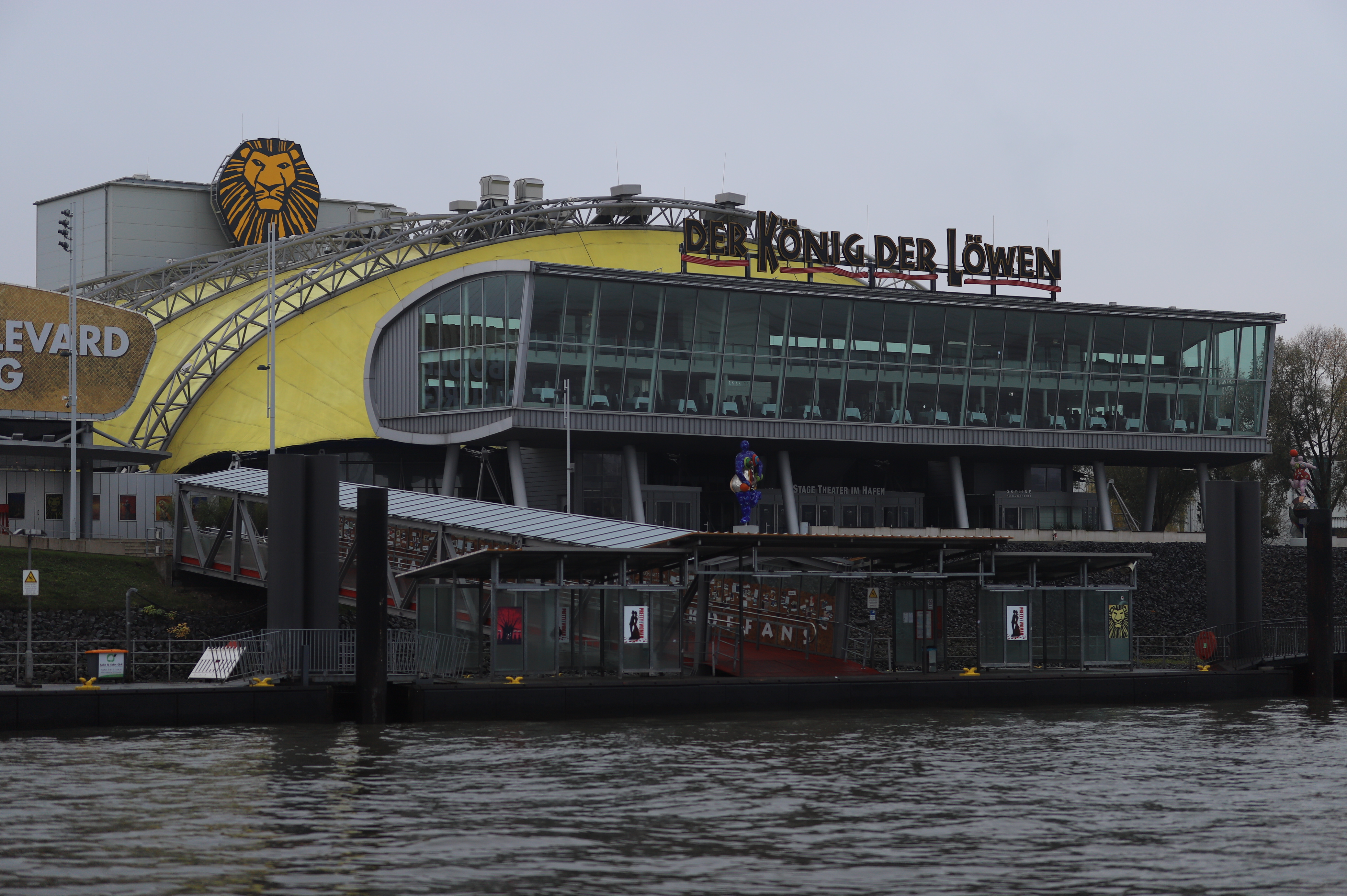
Based on the Disney animated film of the same
name, the musical "The Lion King" transports the audience to the
captivating world of the African savannah. What sets this production
apart is not only the captivating music by Hans Zimmer with Elton John
and lyrics by Tim Rice but also the unique theater where the piece is
performed. The "Stage Theater im Hafen" was built specifically for this
show and accommodates around 2,000 spectators.
The theater itself impresses with imposing
architecture dominated by a tree-like roof that majestically stretches
over the audience area. The stage is intricately designed with vibrant
colors, and sophisticated technology brings the characters of the Lion
King to life. Elaborate masks and detailed costumes transport the
audience to the world of Simba, Mufasa, Nala, Scar, and company. A touch
of African magic fills the air as the performers step onto the stage to
the sounds of "Circle of Life."
Frozen
An Enchanting Musical Experience for the
Whole Family
Since its premiere, the musical "Frozen" has
captured the hearts of both young and old. Based on the beloved Disney
animated film "Frozen," this enchanting stage production whisks the
audience away to the fairytale world of Arendelle. With captivating
melodies, impressive stage sets, and a gripping story, the musical
delights its audience worldwide.
The Plot
The musical "Frozen" tells the moving story
of sisters Anna and Elsa. Elsa, the elder of the two, possesses magical
powers that allow her to create ice and snow. However, after a tragic
accident in which she nearly harms her sister Anna, Elsa shuts her heart
and her powers off from the outside world. This causes a rift between
the sisters, and Arendelle is plunged into eternal winter.
Anna, the brave and lovable younger sister,
sets out to find Elsa and end the cold and ice, restoring harmony to her
kingdom. On her journey, she meets the charming Kristoff, his loyal
reindeer Sven, and the amusing snowman Olaf. Together, they face the
challenges of the icy landscape and the magical adventures ahead. It's a
story about love, sacrifice, self-acceptance, and the value of true
friendship.
The Music
Undoubtedly, the music is a highlight of this
musical. With the captivating melodies by Oscar winner Kristen
Anderson-Lopez and Robert Lopez, the emotions of the characters are
powerfully conveyed. Hits like "Let It Go" (originally "Lass jetzt los")
have become classics, touching the hearts of the audience. The rousing
vocals and energetic choreography make the musical a captivating sensory
spectacle.
Stage Design and Effects
The stage designs and special effects in
"Frozen" are breathtaking. From the snow-covered landscape of the
kingdom of Arendelle to the impressive magical moments when Elsa uses
her powers, the audience is transported into a fascinating world of
fantasy. The costumes are intricately designed and perfectly reflect the
characters, intensifying the immersion into the story.
Popularity and Global Phenomenon
Since its premiere, "Frozen" has become a
global phenomenon. The fascination with the characters and their
adventures has united people all around the world. The musical has been
performed in numerous countries, captivating an international audience.
The timeless story and captivating music have contributed to making
"Frozen" one of the most successful musicals of all time.
In conclusion, the musical "Frozen" offers an
enchanting and unforgettable experience for the entire family. With its
moving story, captivating melodies, and impressive stage effects, it
transports the audience into a magical world full of emotions. Whether
one is a fan of the film or experiencing the story for the first time,
"Frozen" touches hearts and remains in memory long after the curtain
falls.
Both musicals are known not only for their
excellent performers and captivating stories but also for their
professional production and technical finesse. They provide
entertainment for the whole family and have become an integral part of
Hamburg's cultural landscape.
The musicals in Hamburg Harbor have become
crowd-pullers, attracting visitors from all over the world. They not
only enrich the city's cultural offerings but also provide the
opportunity to combine a visit to the Hamburg Harbor with an
unforgettable theater experience. Whether young or old, music lover or
Disney fan – the musicals "The Lion King" and "Frozen" promise an
unforgettable evening amidst the maritime backdrop of Hamburg Harbor.
St. Pauli Landing Stages
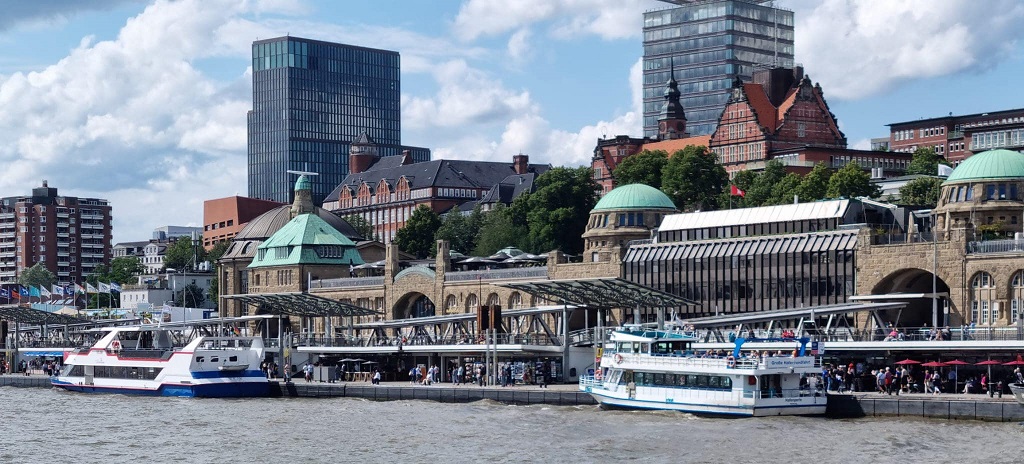
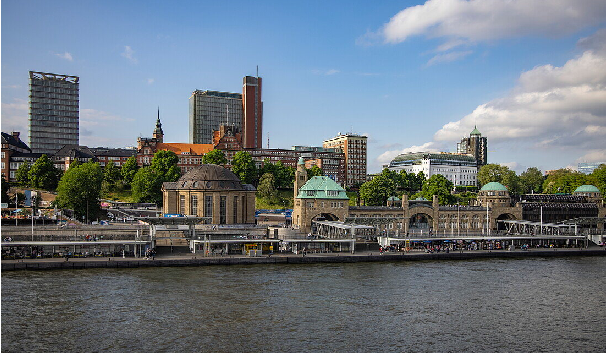
Experience Europe's largest floating water
station!
The first wooden ship pier was built as early
as 1839, serving as a docking point for steamships of overseas lines,
including the famous HAPAG liners that once transported emigrants to
Africa and America. Today, only the HADAG ferries and the Heligoland
line depart from here.
The pontoon system allowed for convenient
loading of ships with coal and ensured sufficient safety distance due to
the risk of fire. From May 1907 to 1911, the 688-meter-long landing
stage was replaced by floating metal pontoons. Half of them were
destroyed during the Gomorrah operation in World War II. Between 1953
and 1976, during the post-war reconstruction, everything was rebuilt.
In addition to the impressive water station,
you will find a variety of restaurants, cafes, ice cream parlors, and
souvenir shops at the Landing Stages. Here, you can also embark on boat
trips with various shipping companies. Two museum ships offer
fascinating insights into the maritime traditions of the region. For
musical-goers, there is a convenient transfer from the Landing Stages to
the event venues.
Above the Landing Stages, you will find the
U3 subway station, connecting Barmbek to Wandsbek-Gartenstadt, as well
as S-Bahn and bus lines, providing convenient access to the surrounding
area.
Experience the maritime flair and the
fascinating history of Europe's largest floating water station!
Old Elbe Tunnel
Discover the fascinating Old Elbe Tunnel and
its role in managing the increasing traffic on the northern Elbe River!
Since the late 19th century, there has been a
search for a permanent solution to cross the Elbe River. With the
tremendous growth of the Hamburg Port and its expansion to the opposite
side of the city, it became crucial to reduce disruptions to shipping
caused by crossing ferries and improve access to major shipyards like
Blohm & Voss, AG Vulcan, Reiherstiegwerft, and the newly developed
harbor basins in the Free Port area. The existing ferry lines operated
by HADAG since 1888 couldn't handle the high volume of workers during
shift changes. In 1895, the Hamburg Port employed a total of 20,000
shipyard workers and 25,000 port workers. Additionally, many people
couldn't afford the ferry fares, and service was often limited in winter
due to snow and ice.
The construction of the Old Elbe Tunnel took
place from 1908 to 1911, costing 10,7 million German goldmarks. Since
its opening in 1911, the tunnel spans 426.5 meters in length and reaches
a depth of 24 meters beneath the Norderelbe. It connects the northern
harbor edge near the St. Pauli Landing Stages with the Elbe Island of
Steinwerder through two tunnel tubes. Inside the tunnel, you'll find
four historic elevators for vehicles and two for pedestrians, making it
a public transportation route used by pedestrians, cyclists, and limited
car traffic.
Since 2003, the Old Elbe Tunnel has been
under protection as a historical monument, preserving its significance
for future generations.
The "Harbor Road" in Hamburg
A Place with History and Controversies
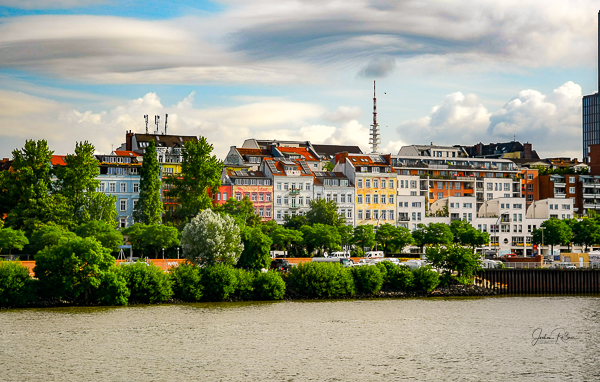
The Harbor Road in Hamburg is undoubtedly a
street with a rich history and a complex mix of social and political
challenges. Located in the St. Pauli district, close to the famous
Landungsbrücken and the Hamburg Harbor, the Harbor Road has undergone
remarkable changes over the years.
History and Social Unrest
Originally planned as a bourgeois residential
area in the 19th century, the Harbor Road changed over the decades. In
the 1960s and 1970s, many of the buildings were abandoned by their
original owners and fell into disrepair. At the same time, rents
skyrocketed in other parts of St. Pauli, leading lower-income people to
settle in the Harbor Road.
In the 1980s, the situation escalated
dramatically. Squatters and socially engaged citizens fought for the
preservation of the buildings and demanded affordable housing for all.
The discontent and demands of the people in the Harbor Road gained more
and more attention. In 1981, an attempt by the police to evict the
occupied houses resulted in violent street battles between protesters
and the police. The Harbor Road became nationally known and symbolized
the struggle for social justice and affordable housing.
Media Coverage and Police Action
The riots and social unrest in the Harbor
Road were extensively covered by the media. Newspapers, TV stations, and
radio provided detailed reports on the events and the protests of the
residents. The Harbor Road became synonymous with the social issues
faced by many cities in Germany.
A particularly significant moment was the
so-called "Black Friday" in May 1981. On this day, a major police
operation involving around 5,000 officers was conducted to contain the
riots in the Harbor Road and evict the occupied houses. The images of
this confrontation spread worldwide, illustrating the intensity of the
confrontations.
Social Restructuring and Consequences
After months of negotiations and further
protests, a compromise was eventually reached. Some of the occupied
houses were legalized and converted into social housing. The residents
were allowed to stay, and the Harbor Road began to develop into a
diverse and vibrant neighborhood.
Today, the Harbor Road is a place of
diversity, shaped by different cultures and social classes. The street
is home to numerous cafes, restaurants, small shops, and cultural
institutions. It has become a place of encounter and exchange.
However, new challenges have emerged as well.
The increasing attractiveness of the neighborhood led to rising rents
and displacement effects. Many residents are once again facing the
question of how to secure affordable housing and preserve the social
structure of the neighborhood.
The Harbor Road in Hamburg remains a place
with a turbulent history and a multifaceted present. It symbolizes the
courage and commitment of many people to social justice and affordable
housing. At the same time, it represents the ongoing challenges that
cities in Germany and worldwide face when it comes to ensuring fair and
sustainable urban development.
HADAG
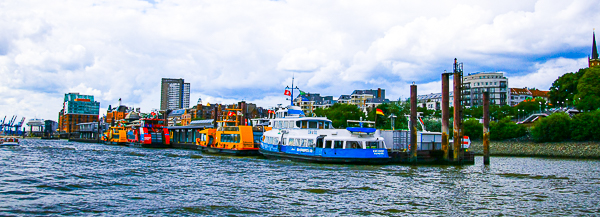
The HADAG - Hamburgische
Dampfschifffahrts-Gesellschaft - has a fascinating origin closely tied
to its connection with Heligoland and maritime tourism. Founded on
August 8, 1888, HADAG started as a shipping company aiming to facilitate
passenger and cargo transport in and around the Hamburg Harbor.
One of HADAG's most remarkable services was
its connection to Heligoland, a small island in the North Sea. The
company played a pivotal role in Heligoland's tourism development by
transporting passengers from Hamburg to the island. With its modern and
reliable ships, HADAG offered people a convenient way to visit the
picturesque island, explore its spectacular coastal landscapes, and
experience its unique wildlife and plant species.
A significant milestone in HADAG's history
was the introduction of the ship MS Astor. Operated by HADAG, the MS
Astor was a luxury cruise ship that led numerous passengers on
unforgettable journeys. With elegant cabins, excellent service, and
diverse entertainment programs, the MS Astor set new standards in
maritime tourism.
Beyond its maritime ventures, HADAG also had
an interesting connection to aviation. In the 1920s, the company
operated its own airline with seaplanes. These aircraft allowed
passengers to travel both over water and through the air, opening new
perspectives for tourism in the region.
Today, HADAG remains active, offering a
variety of ferry services and ship tours in and around Hamburg. The
company has placed a strong emphasis on sustainability and eco-friendly
operations to meet the demands of modern tourism.
HADAG stands as a remarkable example of
Hamburg's maritime transport and tourism development. From its
connection to Heligoland to the luxurious cruise ship MS Astor and the
seaplanes, HADAG boasts a rich history of introducing innovations to
cater to passengers' needs.
A journey with HADAG not only provides a
practical mode of transportation but also offers the chance to savor the
maritime ambiance and the beauty of the waters around Hamburg. Immerse
yourself in the history and charm of HADAG, and embark on an
unforgettable voyage on water or in the air.
U-434 in Hamburg Altona
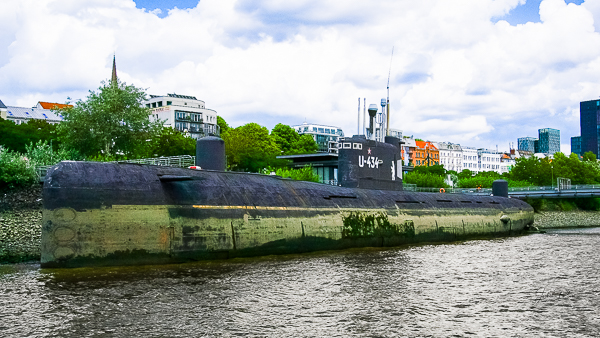
The U-434, a submarine of Project 641-B "Som"
from the Soviet and Russian Navy, is undoubtedly an impressive museum
ship in the Hamburg Harbor. These submarines, referred to as
"Tango-Class" by NATO, were among the largest conventionally powered
submarines of their time. Since 2002, the U-434 has been out of active
service and now serves as a captivating museum ship, ready to tell an
intriguing history.
Technical Specifications
Launch Date: April 29, 1976
Decommissioned: April 2002
Length: 92 meters (overall)
Width: 8.6 meters
Displacement: 3.600 tons
Crew: 62 personnel
Propulsion
3 × 1.900 HP diesel main engines
4 × 140-2.700 HP electric motors
Propellers: 3 impellers
Speed and Dive Depth
Dive Depth: max. 300 meters
Submerged Speed: 15 knots (28 km/h)
Surface Speed: 13 knots (24 km/h)
Armament
The U-434 was equipped with an impressive
arsenal to fulfill its duties during its active service.
This included
6 torpedo tubes with a diameter of 533 mm
24 torpedoes, measuring 8.14 meters in length
and weighing about 2 tons
Torpedo Speed: approximately 60 knots
Loading Time: 6 to 8 minutes
Additionally, the submarine had the capacity
to carry 44 mines on board.
Special Features and Equipment
The interior of the U-434 has been faithfully
preserved, offering visitors a unique glimpse into life and work on a
Soviet submarine. The cramped sleeping bunks, tight working spaces, and
technical instruments on board provide a realistic impression of the
living conditions and challenges faced by the crew.
Michel Abdollahi's "Käpt'ns Dinner"
Since 2016, the well-known host Michel
Abdollahi has been using the U-434 for his exceptional talk show
"Käpt'ns Dinner." In this unique setting, he engages in intriguing
conversations with his guests, adding another layer of significance to
the U-434 as a venue for cultural events.
The U-434 is undoubtedly a fascinating museum
ship with a rich history. A visit on board is not only an experience for
technology enthusiasts and history buffs, but also for anyone interested
in the mysterious world of submarines. Dive into the past and discover
the captivating history of the U-434 in Hamburg.
Altona Fish Market
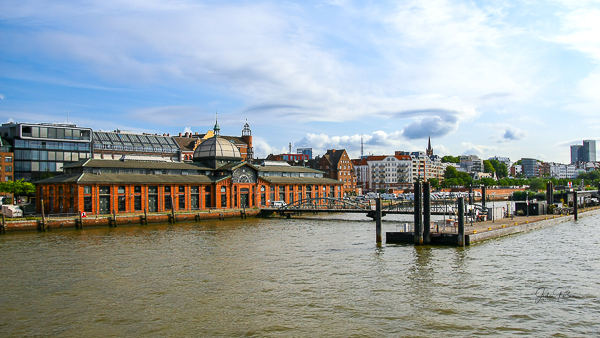
The Altona Fish Market in Hamburg is a place steeped in history, dating
back to the 18th century. Established in 1703, the market quickly became
a significant hub for fresh fish and seafood trading.
The founding of the Altona Fish Market coincided with a time when Altona
was a thriving harbor city. Its proximity to the North Sea and the Elbe
River made it an ideal location for fishing and trading marine products.
Even back then, fishermen, traders, and buyers from different regions
gathered here to exchange their goods.
Over the centuries, the Altona Fish Market has evolved into an important
meeting point for locals and tourists alike. The history of its
establishment still permeates the market's atmosphere today, lending it
a distinctive historical charm.
Today, the Altona Fish Market is a place where you can experience the
lively tradition of fish trading. Every Sunday morning, between 5:00 and
9:30 AM, the market comes to life as fishermen and vendors offer their
fresh products, and visitors from all over the world can discover the
variety of maritime delicacies.
Immerse yourself in the history and vibrant character of the Altona Fish
Market. Experience the rich tradition of this historic site, taste fresh
fish, and delve into the fascinating ambiance of this unique market. The
Altona Fish Market is a place where history and culinary delights come
together, providing an unforgettable experience for tourists.
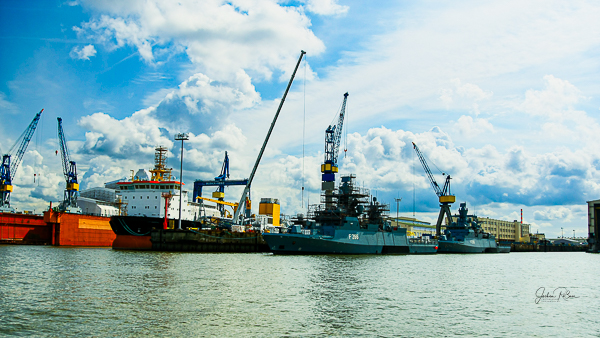
Blohm & Voss
The history of Blohm & Voss, a German shipyard headquartered in
Hamburg-Steinwerder, dates back to 1877. On April 5, 1877, Hermann Blohm
and Ernst Voss founded the shipyard and engineering company Blohm & Voss
as an open trading partnership on the Elbe Island of Kuhwerder (now
Kuhwärder). The shipyard began constructing an iron barque named Flora,
which they sold to the Hamburg shipping company M.G. Amsinck.
In the initial years, the shipyard suffered from a lack of orders as
Hamburg's shipping companies predominantly had their ships built in
England. However, over time, Blohm+Voss gradually received more orders
and constructed ships for various shipping companies. With the
construction of the floating dock Dock I and a focus on repairs, the
economic situation improved significantly.
In 1899, Blohm+Voss delivered its first major warship, the SMS Kaiser
Karl der Große, to the Imperial Navy. Subsequently, the proportion of
marine vessel constructions increased notably, and the shipyard
established itself as the primary construction site for battlecruisers
for the Imperial Navy.
Over the years, the shipyard expanded its premises, including the
construction of the world's largest floating dock with a lifting
capacity of 46,000 tons. During World War I, production primarily
focused on submarine construction, leading to a significant rise in
output.
During the era of National Socialism and World War II, Blohm+Voss
continued to build submarines and was one of the key suppliers of
commercial and warships to the German Reich. During this time, thousands
of forced laborers from all over Europe were employed at the shipyard,
including prisoners from the Neuengamme concentration camp.
After World War II, the shipyard was dismantled, but it gradually
resumed operations in the 1950s. In the following decades, Blohm+Voss
expanded its product portfolio, building bulk cargo carriers and
focusing on the offshore sector and naval shipbuilding.
In the 2000s, Blohm+Voss underwent multiple sales and reorganizations.
In 2016, it was eventually acquired by the Lürssen shipyard group, which
integrated the company into the Naval Vessels Lürssen (NVL) Group.
Today, Blohm+Voss is a part of the NVL Group and continues its
involvement in shipbuilding, especially in the field of mega yachts and
naval vessels. The history of the shipyard is marked by ups and downs,
war-induced adaptations, and various changes of ownership. Nevertheless,
it has established itself as one of Germany's most prestigious shipyards
and remains a significant player in the shipbuilding industry.
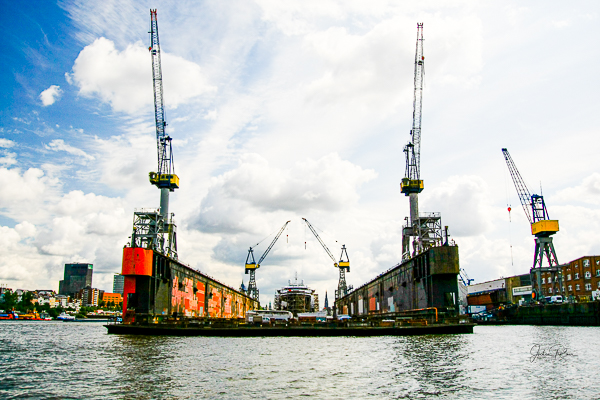
Dock 11 by Blohm + Voss
Dock 11 by Blohm + Voss in Hamburg is one of the most impressive dry
docks in Germany and has a fascinating history. It was completed in 1976
for 90 million marks and has since been a significant location for
shipbuilding and repairing large vessels. The dock has a long tradition
and over the years has accommodated numerous famous ships.
Technical Specifications
Dock 11 by Blohm + Voss is impressively large and boasts imposing
technical features. It has a total length of 320 meters and an inner
width of about 52 meters. With an area of 16,640 square meters, the dock
provides ample space for large vessels, up to a total weight of 65,000
tons, including large cruise ships and superyachts.
Special Features
One of the most notable features of Dock 11 is its impressive
construction and its capability to lift ships out of the water and
perform repairs in a dry state. This allows vessels to stand on the dock
floor for inspection and maintenance, enabling work on the hull bottom,
propulsion system, and other crucial components.
Equipment
Dock 11 is equipped with modern accessories and tools to efficiently and
professionally carry out repair and maintenance works. This includes 2 x
10-ton and 2 x 35-ton overhead cranes, heavy-duty equipment, and other
specialized tools that are essential for working on large ships.